


Treatment of osteochondrosis of the chest is recommended to begin as early as possible, because in an advanced state the disease leads to degenerative and dystrophic damage to the intervertebral discs.The main danger of the disease is that subsequently the shape and structure of the discs gradually change and the intercostal nerves can be compressed.This disease negatively affects the patient's quality of life.
Mechanism of disease development
You can avoid serious complications and start treatment on time only if you know well what thoracic osteochondrosis is and what symptoms it provokes.First of all, the disease affects bone tissue, then cartilage, connective and muscle tissue.On the background of osteochondrosis, atherosclerosis, prostatitis, pneumosclerosis and other pathologies can develop.
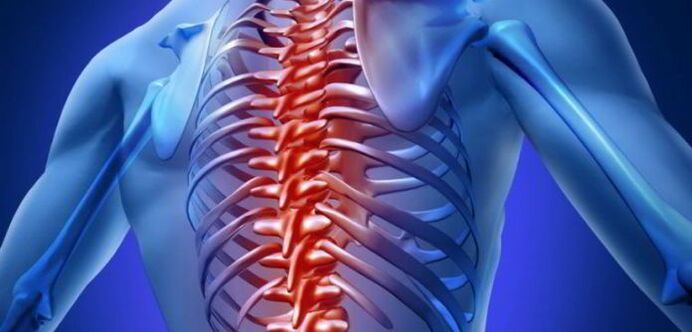
Statistics show that there are about 30% of patients with spinal pathologies in the world, and young people are increasingly affected.Osteochondrosis in the thoracic region is less common than in other parts of the spine and has characteristic symptoms.This is due to the difference in the structure of this partition from others (more disks, but lower mobility).
The ribs and sternum bear a certain load, so the symptoms of osteochondrosis of the chest can sometimes be confused with myocardial infarction.This type of osteochondrosis does not cause pain during exercise or movement, as in lumbar osteochondrosis (therefore, diagnosis can be difficult).Complications related to angina or respiratory failure come to the fore.
The upper thoracic vertebrae are most often involved in the pathological process.Risk factors contributing to the development of the disease include:
- heredity;
- impaired blood supply;
- damage to the intervertebral discs;
- age-related changes;
- excessive physical activity.
The disease occurs due to the following reasons:
- lack of physical activity;
- weakening of the muscle corset;
- congenital defect of the spine;
- infectious process;
- hormonal disorder.
In addition, osteochondrosis of the chest, which has characteristic symptoms and a complex treatment regimen, can occur due to the following reasons: chronic stress, hypothermia and difficult working conditions.Under the influence of degenerative changes, the nucleus pulposus of the vertebrae begins to gradually lose fluid and the cushioning function deteriorates.Due to the fact that the fibrous ring becomes more vulnerable, it begins to gradually disintegrate.
How does the disease manifest itself?
Thoracic osteochondrosis can manifest in different ways, depending on the stage of the pathological process, the age of the patient and the degree of damage to the spine.Signs of osteochondrosis of the chest can be similar to pathologies of internal organs, so great importance is attached to the correct diagnosis.
Thoracic osteochondrosis has the following symptoms:
- abdominal syndrome;
- dorsago;
- pulmonary syndrome;
- changes in the heart muscle;
- neurological signs.
How does thoracic osteochondrosis manifest itself:
- pain in the intercostal spaces;
- chest pain;
- limited mobility;
- numbness in some parts of the body.
Usually the patient complains of characteristic pain in the chest area, between the shoulder blades or ribs.The pain may become more intense during physical activity, upon sudden bending of the body or after a long stay in an uncomfortable position.Pain may radiate to the anterior abdominal wall, liver, or heart.Therefore, often with a combination of other symptoms, a person may encounter a wrong diagnosis and not recognize the disease in time.
The feeling of lack of air is due to the fact that the lung tissue does not expand enough and the frequency of breathing increases.A vertebra that has undergone secondary changes eventually becomes covered with bone growth and interferes with the normal function of the intervertebral joints.
A little less often, the patient may be worried about insomnia, a feeling of tingling or crawling on the skin.Neurological symptoms may also include reflex chest muscle tension and pelvic organ dysfunction or reduced male potency.In addition, patients may complain of weakness in the arms, which is associated with impaired blood flow and tissue hypoxia.During an exacerbation of the disease, the patient may complain of severe pain or inability to perform usual activities.
advice.With age, changes in the spine progress in each person, so by the age of 40, many patients develop osteochondrosis.Periodic medical examinations that people at risk of thoracic osteochondrosis should undergo will help to identify the disease and prevent complications.
Clinical signs
When the thoracic region is affected, symptoms in the form of pain may appear dorsalgia or dorsago.Dorsago is considered one of the most important signs of the development of a pathological process of the spine and is manifested by acute pain.It most often appears in a person when performing monotonous or monotonous work.The pain can be very strong and even interfere with normal breathing.Dorsalgia is a clinical syndrome that has many causes.The nature of the pain can be different: nagging pain, burning, cutting pain.During chest palpation, the pain usually increases.
Signs of thoracic osteochondrosis in women:
- pain in the area of the damaged disc;
- simulation of diseases of internal organs;
- pain and impaired sensitivity along the compressed nerve root.
Compression of nerve roots or compression myelopathy is accompanied by the following symptoms:
- impaired motor function;
- reduced sensitivity;
- pain along the course of the nerve.
Pulmonary syndrome is characterized by signs of hypoxia and congestion in the lungs.Thoracic osteochondrosis in women and men occurs without an increase in body temperature, and this can serve as a differential diagnostic sign.
How does osteochondrosis manifest itself in children: the pain appears in the region of the spine.Due to constant pain, the child may become irritable or cranky and refuse to eat.Over time, there is exhaustion of the nervous system and the negative impact of osteochondrosis on the entire body of the child.
Degrees of thoracic osteochondrosis
Depending on whether osteochondrosis is acute or not, there are different degrees of this disease:
- first degree;
- second degree;
- third degree;
- fourth degree.
In the initial stage, a patient with thoracic osteochondrosis develops cracks in the fibrous ring and experiences pain in the spine and beyond.The pain may be constant or similar to lumbago.In addition, convulsive muscle contractions and pain in the heart may occur.
In osteochondrosis of the chest of the second degree, pathological mobility between the vertebrae is formed.Because of this, the patient may experience subluxation in the thoracic region or develop discomfort with prolonged positioning.
For the third degree, characteristic signs are the rupture of the fibrous ring and the exit of the pulpous nucleus outside its boundaries.At this stage, the disease is accompanied by neurovascular signs, insufficient fixation of the spine and unusual limitation of mobility such as kyphosis or scoliosis.
At the final stage, the symptoms of thoracic osteochondrosis in women or the male half of the population will consist in the development of degenerative processes in the structures around the spine.The interspinous and yellow ligaments are involved in the pathological process and fibrosis is formed.
Complications that sometimes occur with this disease include proliferation of bone osteophytes, inflammation of nerve roots, narrowing of the spinal canal, and spondyloarthrosis.In addition, the patient may develop intervertebral hernia or vegetative-vascular dystonia.The severity of complications directly depends on the progress of the disease and the effectiveness of the prescribed course of treatment.
Diagnostic measures
To get rid of thoracic osteochondrosis and decide what to do, you must first undergo high-quality diagnostics.The most accessible and informative research method is the X-ray method.Osteochondrosis can be suspected if the patient has uneven contours of the intervertebral disc, there is a change in the shape of the body of the vertebrae, a decrease in the height of the intervertebral disc, the formation of osteophytes or a hernia.
X-ray contrast examination (discography), which helps to determine the uneven contours of the nucleus pulposus, helps to make the correct diagnosis and understand how to treat osteochondrosis of the chest.In advanced cases, the contrast material completely fills the intervertebral disc or enters the spinal canal.
Using a diagnostic method such as MRI, it is possible to identify changes in soft tissues and determine the involvement of the spinal cord in the pathological process.
If necessary, an ultrasound examination of the heart or an electrocardiogram is additionally prescribed.After taking an anamnesis, medical treatment of osteochondrosis is carried out, taking into account the severity of the disease, the age of the patient, the presence of concomitant diseases and the presence of certain clinical manifestations.
How is the treatment carried out?
Due to the fact that it is impossible to fully recover from thoracic osteochondrosis, treatment should be started as early as possible to stop the pathological process in the spinal discs.The attending physician must tell you how to treat thoracic osteochondrosis, but in general complex therapy follows the following scheme:
- drug therapy;
- physical therapy;
- physical therapy;
- psychotherapy;
- manual therapy;
- acupuncture.
In most cases, treatment is carried out with drugs and conservative therapy is prescribed.The medical method of treatment includes the use of anti-inflammatory nonsteroidal drugs and glucocorticosteroids.Drug treatment of thoracic osteochondrosis also includes drugs to improve the condition of cartilage tissue.
Thoracic osteochondrosis involves treatment with antispasmodics and muscle relaxants to reduce muscle spasms.The medicine papain will help to keep the fluid in the intervertebral disc and pain relievers are prescribed to get rid of the pain.Thoracic osteochondrosis, which has symptoms of cartilage damage, requires treatment with chondroprotectors.
Traditional medicine will tell you how to get rid of osteochondrosis at home.The most effective means, about which there are positive reviews, are considered celery root and sunflower.
Osteochondrosis of the chest during periods of exacerbation requires the following treatment:
- strict bed rest;
- balanced diet;
- limitation of mobility.
advice.How to treat osteochondrosis of the thoracic region is decided by the attending physician, but the patient will be able to speed up the recovery process if he strictly follows all recommendations, refuses bad habits and adheres to a healthy lifestyle.
The main task in case the patient develops osteochondrosis of the chest is the treatment aimed at stopping the destruction of the spinal discs and restoring the biomechanics of the spine.After getting rid of the severe and constant pain, the patient will be able to lead a normal life.